Reuters : The Guardian
| Total Responses: | 3 |
| Average Quality Score: | 78.3 |
| Average Bias Score: | 3.0 |
| gen: 2026/09/18:18:45 in 36.9 secbias: 3 (Center) |
| type: colorquality: 72 |
| pts: 0 |
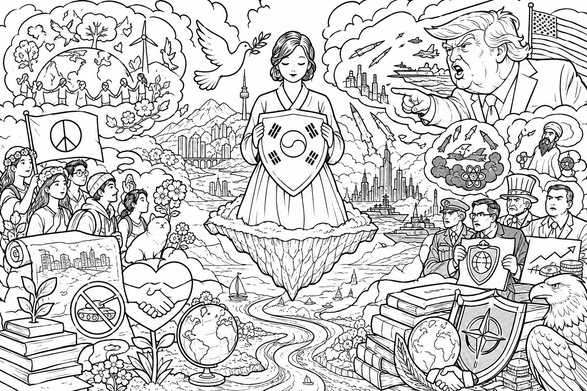
#us-foreign-polic#south-korea#iran-conflict#military-allianc#diplomatic-strat#south korea#lee jae myung#donald trump#iran#strait of hormuz#military policy
Leftist
This decision marks a bold stand for peace and sovereignty against yet another dangerous US initiative in the Middle East. South Korea is prioritizing its citizens’ will and rejecting military pressure from Trump’s imperialistic demands. History reminds us of the chaos that followed compliance in US-led wars. The refusal shows courage, thinking beyond capitalist interests and valuing diplomatic solutions. South Korea sets a precedent against warmongering empires, embodying globalization with empathy and peace.
Rightist
South Korea's decision smacks of a troubling defiance of global commitments. Trump’s stance was clear: allies must contribute to preserving regional stability and security. Turning away from this responsibility showcases a lack of strategic foresight. History warns us that appeasement risks emboldening adversaries like Iran. Economic interests are secondary to maintaining a strong defense posture. South Korea’s refusal could jeopardize relations and embolden rogue regimes, weakening alliances.
 | author: | Reuters | institution: | The Guardian | ¿porque no los dos? |
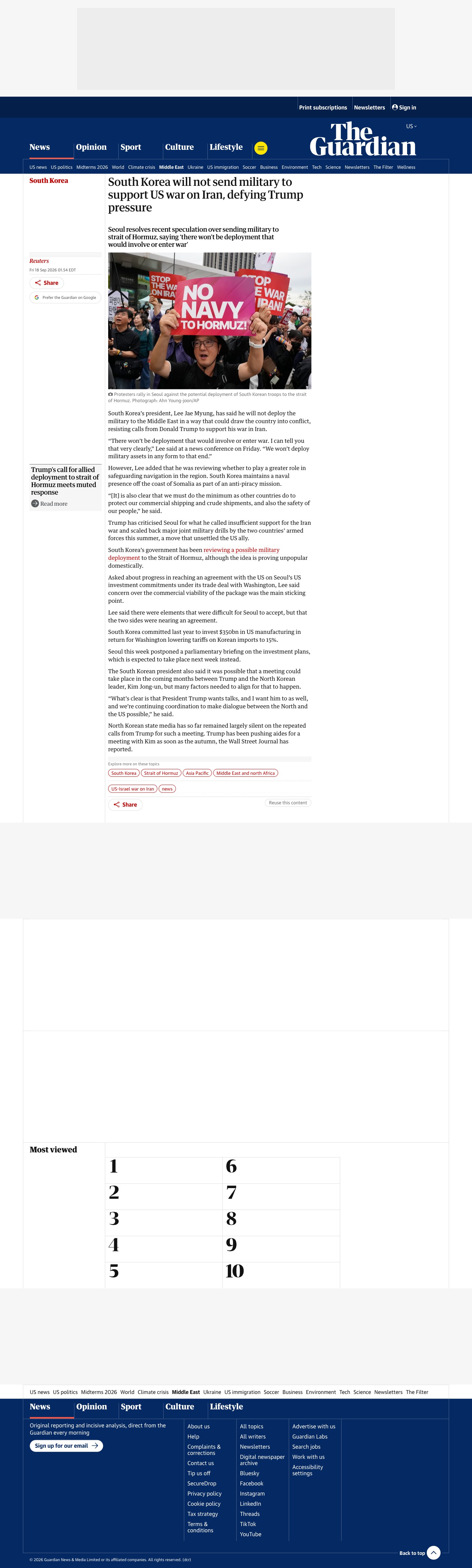
| tl;dr | South Korean president Lee Jae Myung says the country will not deploy forces in ways that would draw it into the Iran war, while considering measures to protect shipping and citizens. The article describes US pressure for support and domestic opposition to deployment. It also reports continuing negotiations over South Korea’s $350bn US investment commitment and the possibility of talks between Donald Trump and North Korean leader Kim Jong-un. | ||||
| deeper: | Direct quotations support the central account, and the article includes Lee’s willingness to protect shipping, adding nuance. However, the headline sounds more categorical than his qualified rejection of war-related deployments. “His war” and “defying Trump pressure,” alongside the protest photograph, emphasize confrontation. These choices do not establish a clear left-right ideology. Reporting relies heavily on Lee, without a direct US response or evidence quantifying domestic opposition. The screenshot’s authenticity and factual claims cannot be independently verified here, and the ending is cut off. | ||||
media: | |||||
| gen: 2026/08/01:20:11 in 2 min 21.0 sec (old)bias: 2 (Center) |
| type: lolsquality: 78 |
| pts: 0 |
#africa#mapping#us-govt#conferences#public-health#guardian#reuters#us state dept#africa map#aids conf#brazil
 | author: | Reuters | institution: | The Guardian | ¿porque no los dos? |
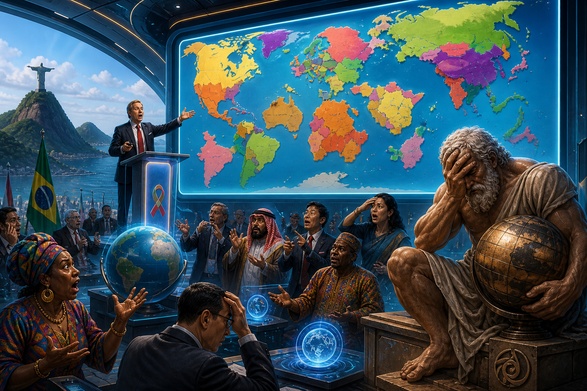
| tl;dr | A US State Department slide shown at an AIDS conference in Brazil reportedly misidentified every country on an Africa map, triggering confusion and criticism online. The State Department said it “takes full responsibility” and called the map inaccurate and “deeply flawed,” adding it has been removed and replaced. The story notes the error occurred during a presentation about AI and global health and that the slide was reportedly produced by a team member under time pressure. | ||||
| deeper: | The piece is largely straightforward, focusing on a specific, verifiable error and the government’s response. It relies on attributed claims (screenshots, conference context, and official statements) and avoids heavy editorializing, though the framing emphasizes embarrassment and ridicule, which slightly increases perceived negativity. Overall quality is solid: clear headline, relevant context, and inclusion of the State Department’s acknowledgment, but limited independent corroboration beyond reported screenshots and reactions. | ||||
media: | |||||
| gen: 2024/07/12:05:42 in 30.8 sec (old)bias: 4 (Center-Left) |
| type: lolsquality: 85 |
| pts: 0 |
 | author: | Reuters | institution: | The Guardian | ¿porque no los dos? |
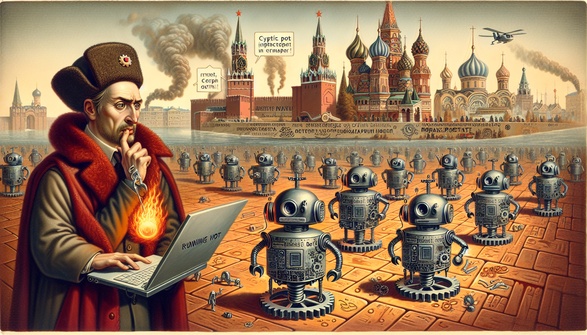
| tl;dr | The US Justice Department announced it disrupted a Russian social media influence operation aimed at spreading pro-Kremlin propaganda using AI-generated content. The operation involved creating fake social media personas to target audiences in the US and elsewhere. | ||||
| deeper: | The article appears to be balanced and provides detailed information about the disrupted Russian influence operation. It quotes officials and provides context, but it includes language that may be perceived as critical of Russia, indicating a center-left bias. The quality of the article is high due to its detailed coverage, use of quotes, and inclusion of relevant background information. | ||||
You made it to the bottom. Now dance!


owned and operated by: RPN Omnigalactic Insitutution as of: 2026/10/16: 16:25 in 0 ms
Enter Code
Login with Account